The ZeroBounce app for ChatGPT brings email validationⓘ into the conversation. Use a simple prompt to check one address or a batch of up to 20, then review the validation status and supporting email infrastructure details.
Before you start
Use a ChatGPT workspace that supports apps or plugins.
Make sure you are allowed to install and connect third-party integrations.
Only validate email addresses you are authorized to process.
Install the ZeroBounce app
Find ZeroBounce in Plugins
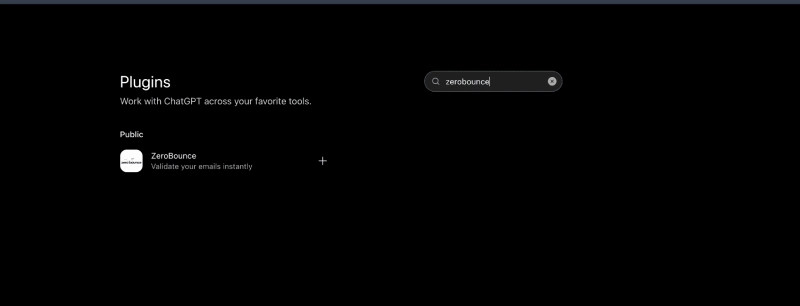
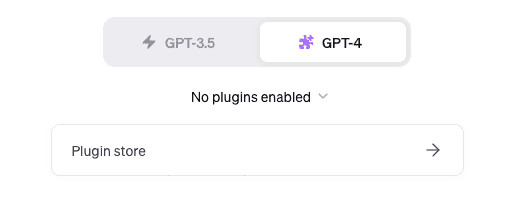
Open the Plugins directory in ChatGPT, type zerobounce in the search field, and select the public ZeroBounce result.
Figure 1. Search for ZeroBounce in the ChatGPT Plugins directory.
Review the listing and install
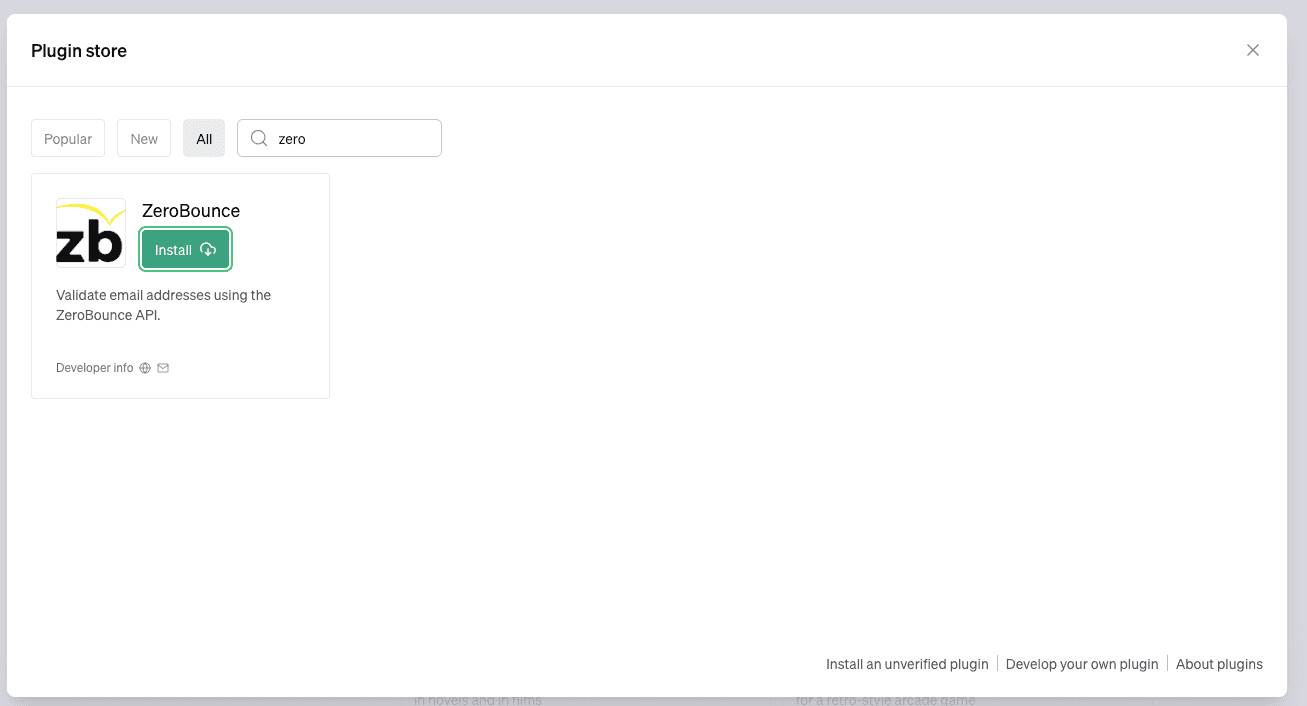
Confirm that the developer is ZeroBounce and that the description refers to instant email validation. Select Install plugin to continue.
Figure 2. Review the ZeroBounce listing and select Install plugin.
Review the connection notice and select Connect
ChatGPT displays a connection screen before the app is added. Read the notice, review the linked terms and privacy information, and select Connect when you are ready.
Figure 3. Review the connection and data-sharing notice before connecting.
Select ZeroBounce from the plus menu
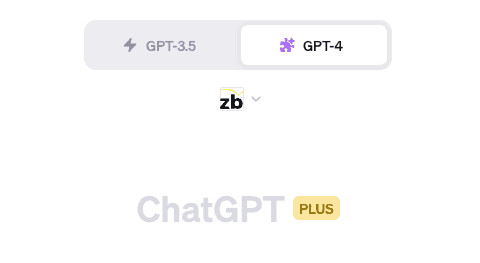
Open a new or existing ChatGPT conversation, select the plus button beside the message field, and choose ZeroBounce from the available apps.
Figure 4. Select ZeroBounce from the ChatGPT plus menu.
Enter the address you want to validate
Use a direct prompt. Mentioning ZeroBounce explicitly helps ChatGPT route the request to the correct app.
Figure 5. ZeroBounce Validate action chip in ChatGPT.
Choose the permission scope
Before sending the address to the ZeroBounce email-check API, ChatGPT asks you to approve the data sharing. Confirm the displayed address, then choose the scope that fits your policy.
Allow once Approve only the current validation request.
For this conversation Approve ZeroBounce requests in the current chat.
Always allow Approve future requests without repeating the same prompt.
Deny Do not share the address or run the validation.
Figure 6. Permission scope prompt before sharing an address with ZeroBounce.
Read the status and supporting details
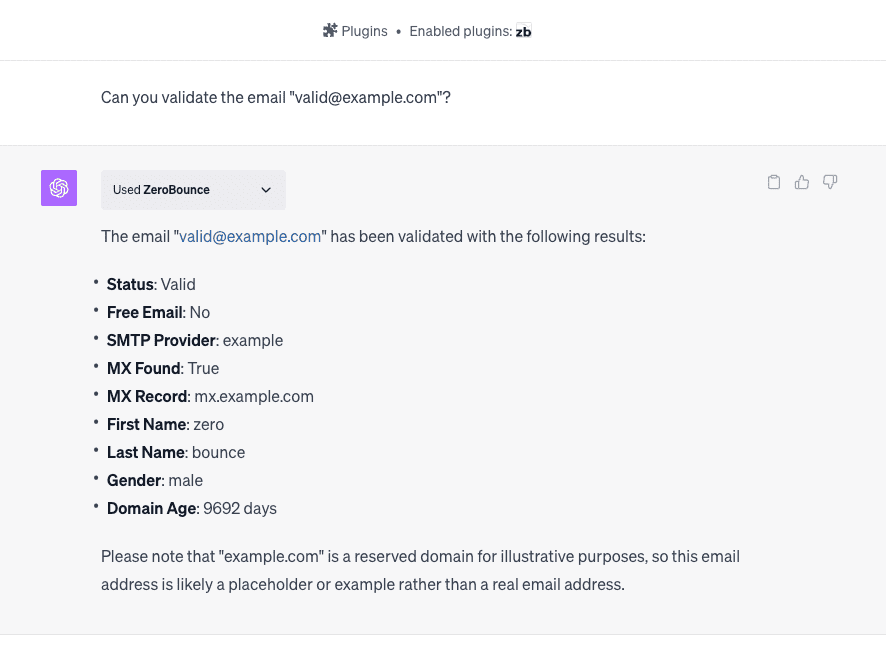
After the app responds, ChatGPT presents a structured result and a brief interpretation. Use both the primary status and the sub-status when deciding what to do with the address.
Figure 7. Single-address validation result from the ZeroBounce app.
Validate multiple email addresses
Paste up to 20 addresses in one request
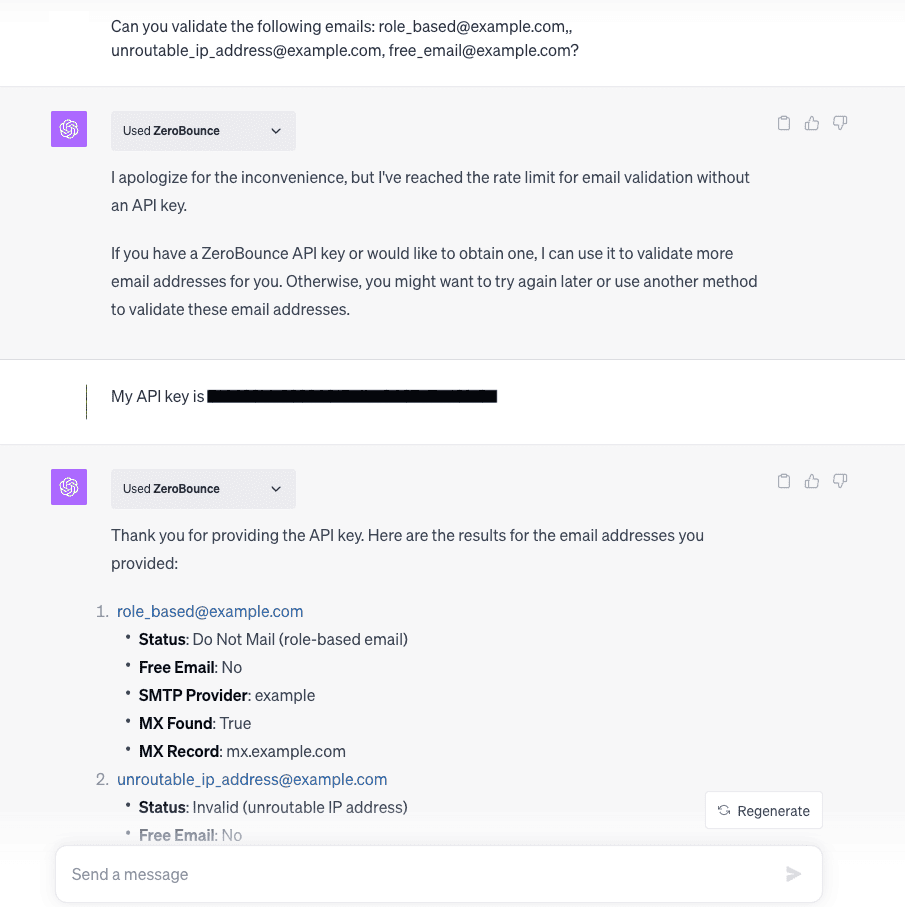
Place each address on its own line or separate addresses clearly. The batch validator processes up to 20 addresses per request.
When more than 20 addresses are supplied, only the first 20 are processed. Split larger lists into additional requests.
Figure 8. Batch validation results from the ZeroBounce app.
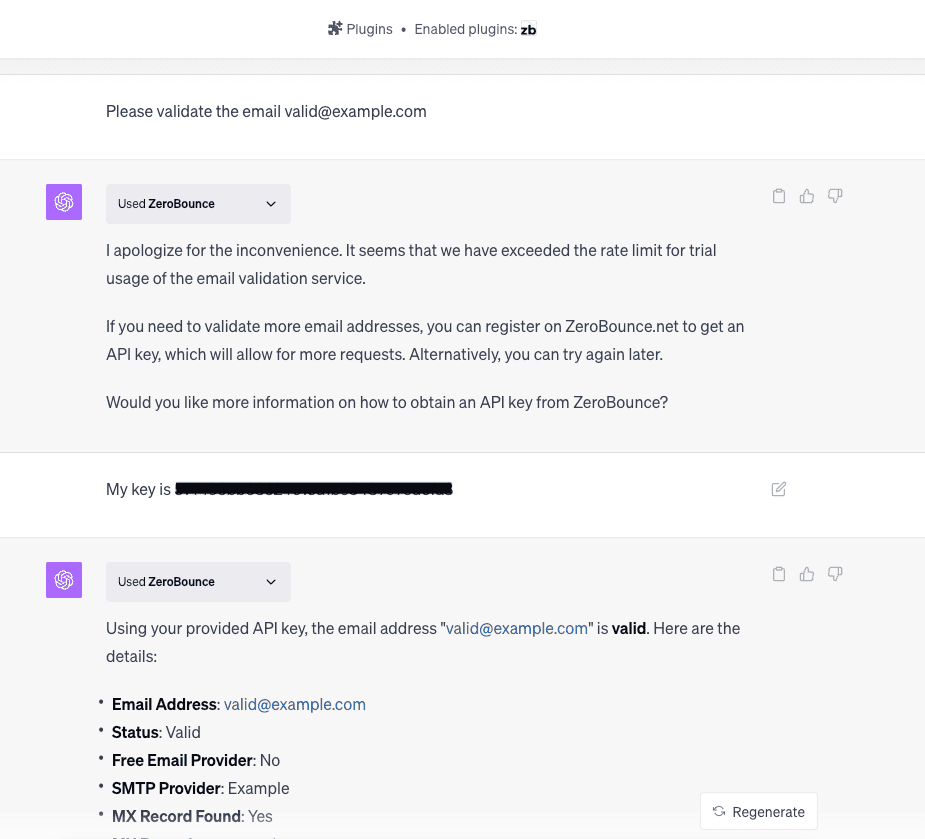
Please note You can perform up to 10 single-email validations and 2 batch validations every 24 hours. Each batch can contain a maximum of 20 email addresses, allowing you to validate up to 40 addresses in batches per 24-hour period.
Prompt examples and recommended workflow
SINGLE ADDRESS
Validate name@company.com with ZeroBounce
BATCH REQUEST
Validate the following addresses with ZeroBounce: first@company.com second@company.com third@company.com
FOCUSED RESPONSE
Validate name@company.com and return only the status, sub-status, domain, MX records, and suggested correction.